
Choosing the right garage door opener is one of those decisions that affects your daily routine more than you might expect. The opener handles the lifting and lowering of your garage door multiple times a day, and the right model brings smoother operation, better security, and longer lasting performance. With so many options available today, picking the best fit for your home depends on understanding what each type offers and how the features align with your needs. This guide walks you through everything you need to know before buying a new garage door opener, including the different types, important features, and the factors that matter most.
Why Choosing the Right Garage Door Opener Matters
Your garage door opener does more than open and close the door. It plays a role in your home’s security, energy use, daily convenience, and even the noise level inside your house. A well matched opener works smoothly with your door’s weight, design, and frequency of use, while a poorly chosen one tends to wear out faster, operate louder, and create issues over time.
The right garage door opener also adds value when it comes to safety. Modern openers come with sensors, rolling code technology, and backup features that protect your family and belongings. Picking the right one is less about finding the most powerful or the most popular option and more about identifying the model that fits how your household actually uses the garage.
Understanding the Different Types of Garage Door Openers
There are several types of garage door openers on the market, and each operates differently. Understanding how each one works helps you narrow down which option suits your home best.
Chain Drive Openers
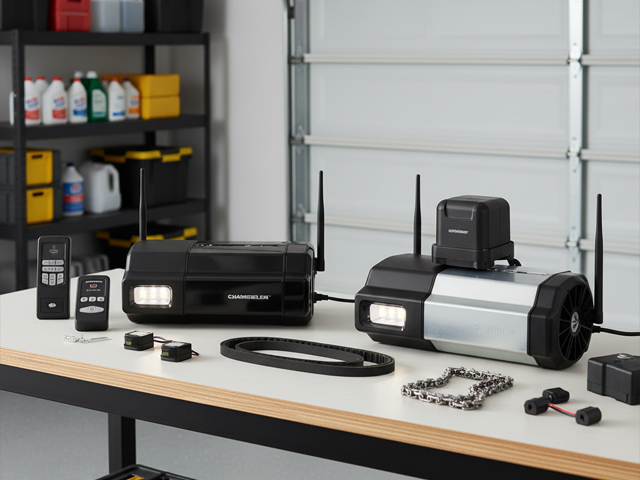
Chain drive openers use a metal chain to pull the door along the track. They are known for being durable and dependable, making them a popular choice for homeowners who prioritize long term reliability. The trade off is noise. Chain drive openers tend to be louder than other types, which can be a concern if your garage is attached to or below a bedroom. For detached garages or homes where noise is not an issue, chain drive openers are a solid pick.
Belt Drive Openers
Belt drive openers operate using a rubber belt instead of a metal chain. The result is significantly quieter operation, which makes them ideal for homes with living spaces near or above the garage. They tend to cost a bit more than chain drive models, but the smooth and quiet performance is worth it for many homeowners. Belt drive openers also require less maintenance over time because there are fewer metal components rubbing together.
Screw Drive Openers
Screw drive openers rely on a threaded steel rod that rotates to move the door. They have fewer moving parts than chain or belt drive systems, which can mean less maintenance. These openers tend to perform well in moderate climates but may need more attention in areas with extreme temperature shifts. They offer a balance between speed and durability and work well for medium weight doors.
Direct Drive Openers
Direct drive openers use a stationary chain with a motor that travels along it. Because the motor itself moves, there are fewer parts working against each other. This design results in very quiet operation and a longer expected lifespan. Direct drive models are an excellent option for homeowners who want a low maintenance opener with smooth performance.
Jackshaft Openers
Jackshaft openers are mounted on the wall beside the garage door rather than on the ceiling. They free up overhead space, which can be helpful for garages with high ceilings, storage racks, or car lifts. Jackshaft openers also tend to offer a modern look and quiet operation. They work especially well with sectional doors and are often chosen for newer or custom built homes.
Key Factors to Consider Before Buying
Beyond the type of opener, several features and specifications influence how well the unit will perform in your home. Looking at these factors helps you choose an opener that matches your day to day needs.
Horsepower and Door Weight
Garage door openers come in different horsepower ratings, typically ranging from one half horsepower to one and one quarter horsepower. Lighter single car doors usually work well with a one half horsepower opener, while heavier double doors or insulated doors often need three quarter horsepower or more. Matching the motor strength to your door’s weight helps prevent strain and extends the lifespan of the unit.
Noise Level
If your garage shares walls or a ceiling with bedrooms or living areas, noise level becomes a major consideration. Belt drive, direct drive, and jackshaft openers are generally the quietest options. Chain drive openers are louder but may be acceptable for detached garages or homes where sound is not a concern.
Security Features
Modern garage door openers come with advanced security technology. Rolling code systems generate a new code each time the opener is used, which prevents others from intercepting the signal and gaining access. Some models include manual lock modes for added protection when you are away from home. Look for openers with encrypted signals and tamper resistant features.
Smart Technology and Connectivity
Smart garage door openers connect to your home’s Wi-Fi network, allowing you to control the door from your smartphone. You can open and close it remotely, receive alerts when it operates, and grant access to family members or service providers. Many smart openers also integrate with voice assistants and home automation systems, adding convenience and control to your daily routine.
Backup Battery Power
A backup battery keeps your garage door operating during power outages. Without one, you may have to manually disengage and lift the door, which is inconvenient and difficult with heavier doors. Backup battery features have become a standard offering on many newer models, and they are worth considering if your area experiences frequent storms or power interruptions.
Safety Features
Safety features should be high on your list when choosing an opener. Auto reverse sensors stop and reverse the door if something is detected in its path, which helps prevent accidents involving people, pets, or vehicles. Motion detection lights turn on when movement is sensed near the garage, improving visibility and security. Soft start and stop technology slows the door at the beginning and end of its cycle, reducing wear on the system and creating quieter operation.
Matching the Opener to Your Garage Door Type
Different garage doors have different needs, so the opener you choose should align with the door it will be operating. Sectional doors are the most common style and pair well with chain, belt, direct drive, and jackshaft openers. Single panel doors swing outward as they open and require an opener that can handle that motion. Heavier doors, including insulated models or custom designs made of solid wood or thick steel, need higher horsepower units to operate smoothly without putting stress on the motor.
It also helps to think about the size of the door. Standard single car doors generally use less powerful openers, while double doors or oversized doors call for stronger motors. Selecting an opener that matches your door type ensures dependable operation and reduces the chance of premature wear.
Lifespan and Long Term Performance
Garage door openers typically last between ten and fifteen years, depending on the type, usage frequency, and how well they are maintained. Belt drive and direct drive models often last longer because they have fewer parts that rub against each other. Chain drive openers are durable but may need more frequent lubrication and adjustment over the years.
Routine maintenance plays a major role in how long your opener performs reliably. Lubricating moving parts, tightening hardware, checking the balance of the door, and testing the safety features all help keep the opener in good working condition. Investing in a quality unit upfront and keeping up with maintenance pays off in long term performance.
Professional Installation vs. DIY
Installing a garage door opener may look straightforward, but it involves working with electrical components, heavy parts, and precise alignment. Incorrect installation can lead to safety issues, voided warranties, and damage to the door or opener itself. The torsion springs, cables, and electrical wiring all require careful handling.
Professional installation ensures the opener is mounted securely, the safety sensors are calibrated properly, and the unit operates the way it should from day one. Most manufacturers also recommend or require professional installation to keep the warranty valid. Hiring an experienced technician saves time and gives you peace of mind that the system is set up correctly.
Schedule a Garage Door Opener Consultation with Overhead Door Company of Brunswick
Choosing the right garage door opener becomes much easier when you have an expert guiding the process. Overhead Door Company of Brunswick helps homeowners select the opener that fits their door type, household needs, and long term goals. From quiet belt drive models to space saving jackshaft units, the team can recommend the best option and handle professional installation from start to finish.
Reach out to Overhead Door Company of Brunswick today to discuss your needs and find the right garage door opener for your home.