
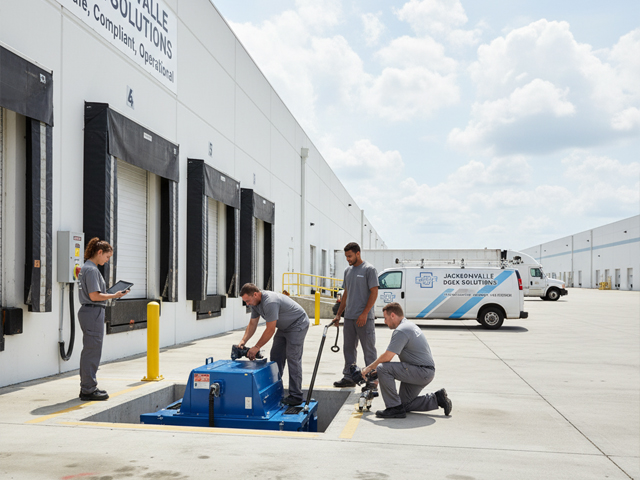
A loading dock works hard every single day. Trucks come and go, freight moves in and out, and dock levelers, seals, and restraints get used constantly without much thought. It is easy for dock equipment to become an afterthought until something breaks and operations grind to a halt. For businesses in coastal Georgia, staying ahead of wear and tear on dock equipment in Brunswick, GA is one of the simplest ways to avoid costly downtime and keep employees safe.
Overhead Door Company of Brunswick works with commercial and industrial facilities across the region to install and service dock equipment, and one theme comes up again and again. Neglected equipment does not fail all at once. It fails gradually, in ways that quietly increase risk and cost until a facility manager is left dealing with a much bigger problem than a simple tune-up.
Why Dock Equipment Needs Regular Attention
Dock levelers, seals, shelters, and vehicle restraints are built to handle daily impact and heavy use, but that does not mean they can be ignored. These systems bridge the gap between a trailer and a warehouse floor, seal out weather and pests, and hold trailers steady while forklifts and workers move freight on and off. When any of these components starts to wear down, the effects ripple through the entire loading process.
Facilities that treat dock equipment as a set-it-and-forget-it system tend to run into trouble sooner than those that build inspections into their routine. Regular attention catches small issues while they are still cheap and easy to fix.
The Real Consequences of Skipping Maintenance
Increased Risk of Workplace Injuries
Dock equipment exists in large part to protect the people working around it. A worn dock leveler can create an uneven surface between the trailer and the dock, increasing the chance that a forklift tips or a worker trips while moving freight. Vehicle restraints that no longer engage properly can allow a trailer to shift or separate from the dock during loading, which is one of the most dangerous situations a loading dock can face. Proper dock equipment reduces the risk of accidents by stabilizing trailers and creating safer working conditions, and that protection only holds up when the equipment is inspected and kept in good repair.
Damage to Freight and Building Structures
A dock seal or shelter that has deteriorated no longer does its job of keeping out wind, rain, and pests. Over time, gaps around a damaged seal let moisture into the building, which can affect stored inventory, damage flooring, and lead to mold or corrosion issues that are far more expensive to fix than the seal itself. A leveler with worn hinges or a damaged lip can also cause freight to shift unexpectedly during transfer, leading to product damage that shows up as a loss on the books rather than an obvious mechanical failure.
Slower, Less Efficient Loading
When dock equipment does not operate smoothly, every truck that comes through the facility takes longer to load or unload. A leveler that sticks or does not lower and raise as it should forces workers to slow down or find workarounds. Multiply that delay across dozens of trucks a week, and a facility can lose real time and productivity without ever pinpointing a single obvious cause. Dock equipment plays a critical role in protecting employees, freight, and buildings during loading and unloading, and when it is not functioning correctly, that efficiency disappears along with the safety benefit.
More Frequent and More Expensive Repairs
Small issues left unaddressed do not stay small. A leveler with a minor hydraulic leak can turn into a full component failure. A seal with a small tear can deteriorate until the entire unit needs replacement instead of a patch. Facilities that wait until equipment fails completely almost always pay more than those that catch problems during a routine inspection, and they often face unplanned downtime on top of the repair bill.
Unplanned Downtime During Business Hours
Perhaps the most disruptive outcome of neglected dock equipment is the moment it fails completely, usually during a busy shift when a truck is already backed up to the dock. Facilities that have no maintenance schedule are far more likely to face equipment failures at the worst possible time, forcing trucks to wait, freight to sit, and staff to scramble for a temporary fix.
What Regular Dock Equipment Service Looks Like
Preventing these problems does not require a complicated process. A consistent inspection and service routine typically includes the following steps.
A full inspection of the equipment and its components comes first, giving a technician the chance to identify any worn or damaged parts before they cause a bigger issue. From there, any necessary repairs or part replacements are completed, along with adjustments to springs, rollers, cables, and tracks where applicable. Safety checks and operational testing confirm that everything is functioning as expected, and a final inspection verifies smooth and reliable operation before the technician leaves the site.
This kind of routine service restores safe and dependable operation, helps prevent further damage, improves performance and reduces noise, and extends the lifespan of the equipment overall. It also reduces the likelihood of costly repairs showing up later, which matters for any facility trying to manage a maintenance budget responsibly.
Signs Your Dock Equipment Needs Attention
A few warning signs tend to show up before a full failure happens. A dock leveler that squeaks, sticks, or does not sit flush with the trailer bed is worth a closer look. Seals or shelters with visible tears, gaps, or water intrusion should be addressed before weather damage spreads further into the building. Vehicle restraints that do not engage smoothly or show visible rust and wear deserve immediate attention, since they play a direct role in keeping trailers secure during loading. Any unusual noise, slow operation, or visible damage to dock accessories is a signal that a professional inspection is overdue.
Why Facilities in Brunswick Choose Local, Experienced Service
Overhead Door Company of Brunswick has been locally owned and operated since 1994 and is backed by the Overhead Door brand, which has been part of the garage door and dock equipment industry since 1921. That combination of local knowledge and nationwide brand support gives businesses in Brunswick a service provider who understands the specific demands of coastal Georgia facilities, from humidity and salt air to the daily wear that comes with heavy freight traffic.
The team provides dock levelers that create a smooth transition between the dock and vehicle, dock seals and shelters that protect interiors from weather and debris, vehicle restraints that secure trailers during loading and unloading, and a range of dock accessories and safety equipment that support daily operations. Technicians are factory-trained and certified, and every job is backed by honest pricing, clear communication, and quality parts.
Facilities throughout Brunswick, St. Simons Island, Jekyll Island, Darien, Jesup, Kingsland, Waycross, and the surrounding Glynn County and Coastal Georgia area rely on this team for dependable dock equipment installation and service.
Frequently Asked Questions
What types of dock equipment do you provide? Dock levelers, seals, shelters, vehicle restraints, and related dock safety equipment are available for commercial and industrial facilities.
Why is dock equipment important for loading docks? It helps protect workers, freight, and facilities while improving efficiency during loading and unloading.
Can dock equipment improve workplace safety? Yes. Proper dock equipment reduces the risk of accidents by stabilizing trailers and creating safer working conditions.
Do you service existing dock equipment? Yes. Existing dock equipment can be serviced and maintained to help keep it operating safely and reliably.
How often should dock equipment be inspected? Regular inspections help identify wear and ensure equipment continues to operate safely under daily use.
Protect Your Loading Dock Before a Small Problem Becomes a Big One
Neglected dock equipment rarely fails without warning. The signs are usually there long before a breakdown happens, and a routine inspection is a far simpler fix than an emergency repair or an injury on the loading dock. If your facility relies on dock equipment in Brunswick, GA, Overhead Door Company of Brunswick is ready to help with installation, inspection, and service that keeps your loading dock running safely. Call (912) 602-6937 today to schedule dock equipment service or ask any questions about keeping your facility protected.